AquaClash

A strategy game economy built for retention, alliances, and seasonal competition.

What it is

Alliance-driven strategy with a long-game economy.

AquaClash is a strategy game where the core experience is not just PvP. It is cooperation, rivalry, and long-term progression.

The product goal is clear:

  • Build an economy that rewards consistency
  • Create social gravity through alliances
  • Use seasons to reset stakes and drive returning players
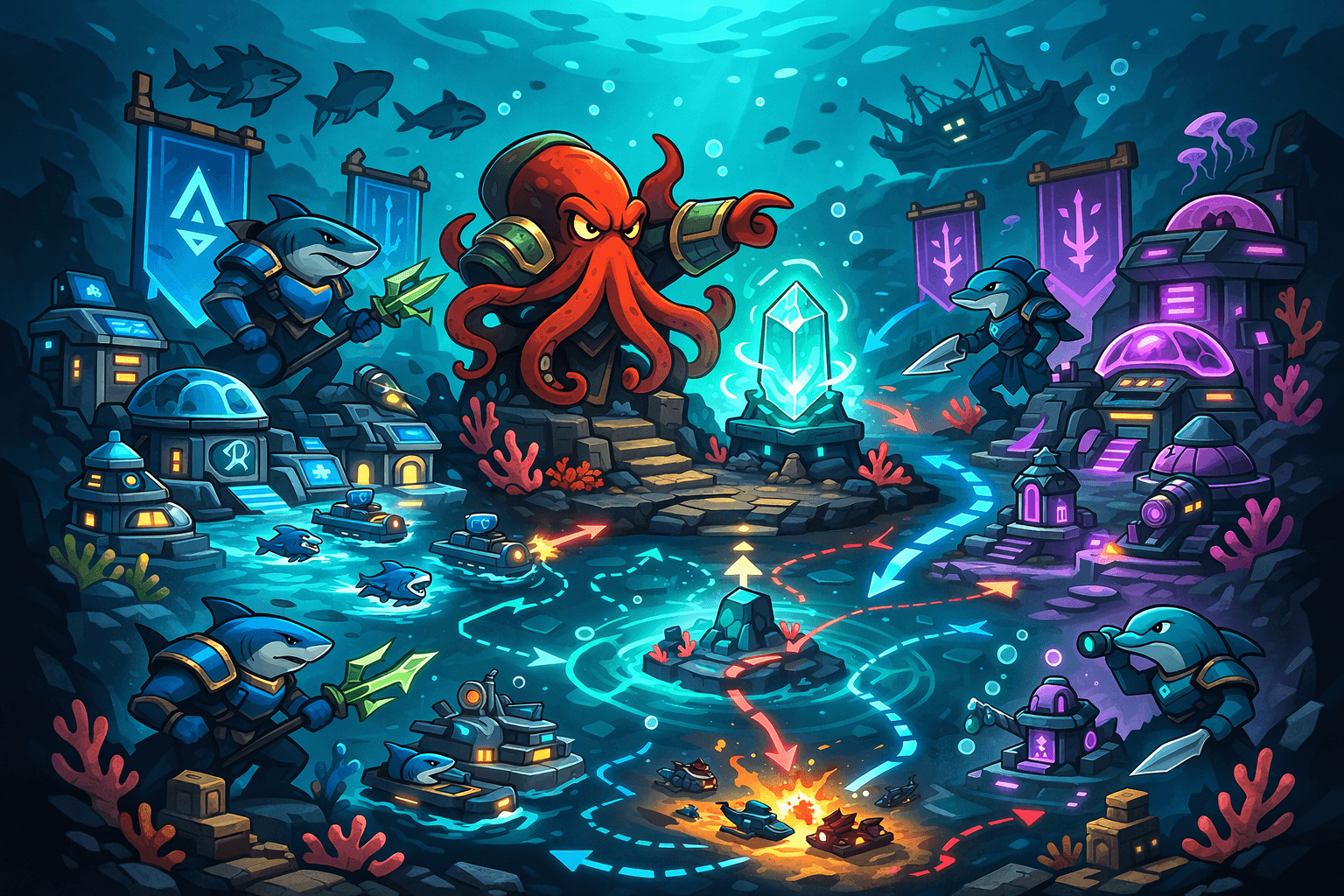
AquaClash gameplay screens showing alliance strategy and underwater theme
AquaClash gameplay focused on alliances and seasonal conflict.

The core loop

Progress. Power. Conflict. Status. Repeat.

The backbone loop is designed to bring players back daily:

  • Gather resources and upgrade your base
  • Train units and increase combat strength
  • Join an alliance for shared strategy and protection
  • Compete in battles and events for rewards and ranking
  • Reinvest rewards into upgrades to grow stronger

The loop must feel satisfying for both solo players in early game and alliance players in mid and late game.

Retention design

Make every session meaningful.

Retention is driven by:

  • Timed upgrades for construction and training
  • Events that create urgency without feeling punishing
  • Social commitment through alliances
  • Competitive identity through rankings and roles

Every session should create progress that feels worth returning for.

Season design

Structured competition with recurring stakes.

The endgame centers around The Abyssal Throne.

  • Alliances fight to control a deep-sea relic
  • Control must be held for a fixed period to win the season
  • Seasons reset power concentration and reintroduce competition

Season structure creates narrative arcs. Build. Compete. Win or lose. Reset.

Alliance warfare

Social dynamics are the real retention engine.

Alliance systems create strong retention because they create:

  • Coordination through raids and defense
  • Defined roles such as leaders and strategists
  • Diplomacy and negotiation between groups
  • Identity and reputation

Players may skip a task. They are less likely to abandon their team.

Monetization and pacing

Speed and convenience without destroying balance.

The economy supports instant upgrades using pearls.

  • Players can wait for time-based upgrades
  • Or spend pearls to complete upgrades instantly

Spending should feel like momentum, not unfair advantage.

Early game must feel fast. Mid game introduces trade-offs. Late game monetization focuses on tempo, not raw power.

Economy flow

How progression compounds over time.

The economy loop is simple but powerful:

Resources → Upgrades → Unit Training → Battles → Rewards → Reinvestment → Stronger Base → Harder Battles → Greater Rewards

Each cycle increases player capability.

  • Resources fund upgrades
  • Upgrades unlock stronger units
  • Stronger units win battles
  • Battles generate rewards
  • Rewards accelerate the next upgrade cycle

The goal is compounding progression without runaway imbalance.

FAQs

Key design questions.

What makes AquaClash different from other strategy games?
+

The focus is on seasonal stakes and alliance warfare as the main retention driver.

The game is designed to feel like an evolving conflict, not a repetitive base-building cycle.

How do you prevent permanent dominance?
+

Seasons reset competition windows. Endgame is alliance-based rather than purely individual. Monetization focuses on tempo rather than unlimited power.

Balance is continuously adjusted over time.

Why is the alliance layer critical?
+

Social commitment drives retention more strongly than content alone.

When players feel responsible to their team, engagement increases naturally.

Build log: game economics

Notes on pacing, progression, and retention design lessons.

Explore all projects

Vdea, AquaClash, Lanami and more.

Visit AquaClash

Play the live version and explore the alliance-driven strategy world.

Interested in game systems?

Let’s talk economy and retention design.

If you are building a strategy game, I am happy to compare notes on:

  • Economy loops
  • Alliance mechanics
  • Seasonal endgame systems
  • Monetization without breaking fairness