Vdea

A video bounty platform where ideas become challenges — and creators compete for rewards.

What it is

A marketplace for video challenges with real incentives.

Vdea lets people post video ideas with a bounty, and creators submit videos to win that bounty.

The key difference is that rewards can be awarded:

  • Manually by the idea creator
  • Or automatically based on transparent engagement metrics

The aim is simple: make ideas funding-ready, and make creators confident the reward system is fair.

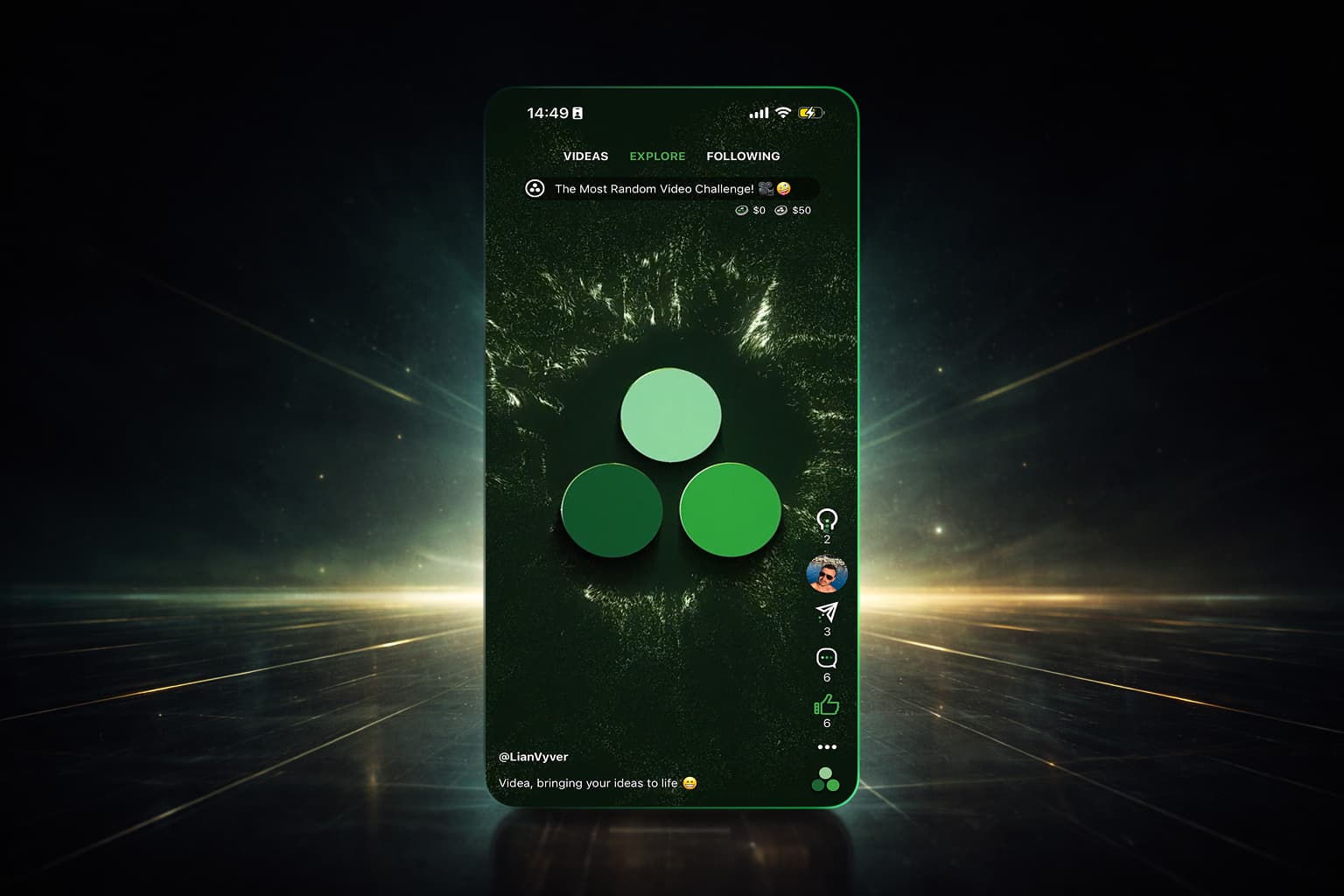
Vdea app screens showing video feed and idea bounty concept
Vdea: ideas → bounties → creator submissions → engagement-based outcomes.

The core loop

Incentives first. Content follows.

The product is built around one loop:

  • A user posts an idea (a “vdea”) and attaches a bounty
  • Other users can increase the bounty if they like the idea
  • Creators submit videos to compete for the bounty
  • Winners are selected either by the creator or automatically by performance

This creates a marketplace dynamic:

  • Funders signal demand with money
  • Creators compete to supply the best execution
  • Viewers determine outcomes through engagement

Reward logic

Transparent, measurable, and hard to game (in theory).

Rewards are determined using engagement points.

The score is designed to combine multiple signals:

  • Likes
  • Comments
  • Views
  • Watch time
  • Saves
  • Shares

The goal is to avoid a simple “likes-only” system and reward content that holds attention.

Important: the exact weighting is tunable and should evolve based on observed abuse patterns and creator behavior.

Monetization

Bounties first, then scale into platform economics.

The initial monetization model is tied to the bounty flow:

  • Users fund ideas (bounties)
  • The platform can take a small fee on bounty creation or payout
  • Optional boosts or featured placement for ideas

Over time, there are obvious expansion paths:

  • Creator monetization tools
  • Premium analytics for creators and idea funders
  • Sponsored challenges and brand-funded bounties

System design notes

The interesting part is not the feed, it’s the integrity of the system.

The hardest problems aren’t UI. They’re trust and incentives:

  • Preventing payout disputes
  • Preventing engagement manipulation
  • Handling edge cases when creators don’t award bounties
  • Ensuring transparent rules and predictable outcomes

The north star is to reduce the feeling of: “the platform decided.”

Instead: “the system did exactly what the rules said.”

FAQs

The questions that matter early.

What happens if the idea creator never awards the bounty?
+

The bounty can be configured to award automatically after a time window using engagement-based ranking.

This is important because it protects creators and keeps the marketplace credible.

How do you stop people from gaming engagement?
+

You don’t “stop it” completely, you reduce it and make it expensive.

Approaches include:

  • Weighting watch time and saves more heavily than likes
  • Rate limits and anomaly detection
  • Device/account trust scoring
  • Manual review for suspicious bounties

The scoring model must evolve with real-world abuse patterns.

Why would people fund ideas instead of just posting ideas for free?
+

Because money is a signal.

A funded idea tells creators: “this is worth making.”

And it tells viewers: “this is competitive, higher-effort content.”

Build log: lessons from Vdea

Design decisions, trade-offs, mistakes, and what I’d do differently.

Explore all projects

Vdea, AquaClash, Lanami and whatever I’m building next.

Visit Vdea

Explore the live video bounty platform.

Want to talk?

If you’re building something similar, I’m open to conversations.

I like comparing incentive systems, monetization mechanics, and what actually drives creators.

If you want to collaborate, invest, or pressure-test the model reach out.